DONGGUAN SUNYO PLASTIC CO.,LTD
Rich experience in plastic film/sheet (petg pet pvc pp ps)
National Service Hotline:
+86-0769-86860326
+86-13825700951

DONGGUAN SUNYO PLASTIC CO.,LTD
Rich experience in plastic film/sheet (petg pet pvc pp ps)
National Service Hotline:
+86-0769-86860326
+86-13825700951

Phone: Mr. Gao 13826944220, 13825776951
Fax: 0769-82819890
email: sxjpchina@126.com
Website: www.shengyaoplastic. com
Address: No. 21 Changxing Road, Kinkou, Chashan Town, Dongguan City, Guangdong Province
The PVC plastic material in the chemical industry refers to composite polyvinyl chloride. The English name is pvegerychlorid, the English abbreviation is PVC. This is the significance of the wide range of uses of PVC.
Its natural color is light yellow, semi transparent, glossy. Transparency is better than polyethylene polypropylene, but worse than polystyrene. According to the different dosage of additives, it can be divided into soft hard polyvinyl chloride. Soft products have elasticity, toughness, a sticky feel. The hardness of hard products is higher than that of low-density polyethylene. When it is lower than polypropylene, it will turn white at the inflection point. Common products: boards, pipes, shoe soles, toys, doors windows, wire sheaths, stationery, etc. It is a polymer material that uses chlorine atoms instead of hydrogen atoms in polyethylene.
The chemical physical properties of PVC plastic materials. Hard PVC is one of the widely used plastic materials. PVC material is a non crystalline material. In practical use, PVC materials often contain stabilizers, lubricants, auxiliary processing agents, pigments, reinforcing agents, other additives.
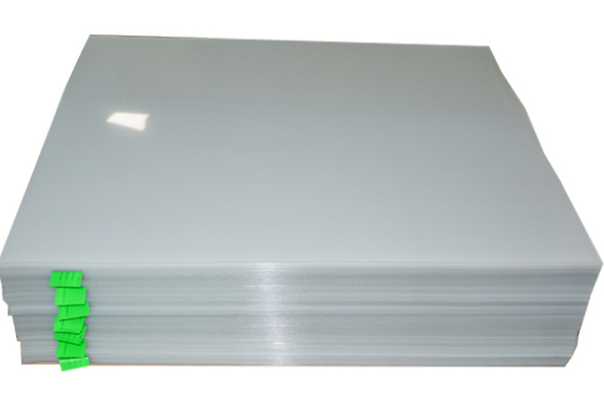
PVC plastic material has excellent geometric stability, including non flammability, high strength, weather resistance. PVC has strong acid resistance to oxidants reducing agents. However, it can be corroded by concentrated oxidizing acids such as concentrated sulfuric acid. Concentrated nitric acid is suitable for contact with aromatic chlorinated hydrocarbons.
The melting temperature of PVC plastic material during processing is a very important process parameter. If this parameter is appropriate, it may lead to material decomposition issues. The flow characteristics of PVC are quite poor, its process range is very narrow. Especially high molecular weight PVC materials are more difficult to process (which usually require the addition of lubricants to improve flow characteristics), so low molecular weight PVC materials are usually used. The shrinkage rate of PVC is quite low, generally ranging 0.2% to 0.6%.
PVC plastic materials can be divided into soft PVC hard PVC. Hard PVC accounts for about 2/3% of the market, while soft PVC accounts for 1/3%. Soft PVC is generally used on the surface of leather such as floors ceilings, but due to the presence of softeners (which is also the difference between soft PVC hard PVC), it is easy to become brittle difficult to store, so its range of use is limited. Hard PVC does contain softeners, therefore it has good flexibility, is easy to form, brittle, non-toxic pollution-free, has a long storage time. Therefore, it has great development application value. Hereinafter referred to as PVC. The essence of PVC is a vacuum formed film used for surface packaging of various panels, hence also known as decorative film adhesive film, used in many industries such as building materials, packaging, pharmaceuticals, etc. Among them, the building materials industry accounts for 60% of the main proportion, followed by the packaging industry, there are several other small-scale applications.

DONGGUAN SUNYO PLASTIC CO.,LTD
Phone: 0769-2361 6862/2361 6962/8686 0326/8686 0306
Fax: 0769-8281 9890
Contact: Mr. Gao 138 2694 4220
Address: No. 21 Changxing Road, Kinkou, Chashan Town, Dongguan City, Guangdong Province
Record number: Su ICP No. 13050679
WeChat QR code

mobile site

